
Indian companies continue to update benefit plans and and increase employee communication.
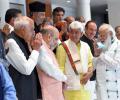
'For the government, statehood is one of the end-points of the journey. A vast distance has to be traversed to reach there. There are many turns on the road, some resting points, and possibly, many cul-de-sacs.'
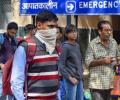
The GoM was told that six states -- Maharashtra, Delhi, Gujarat, Tamil Nadu, Uttar Pradesh and West Bengal -- account for 86 per cent of the deaths caused by COVID-19 and 32 districts account for 80 per cent of such fatalities, the Union health ministry said.

With the dizzying rise in the number of Covid-19 cases in the country, India Inc has transitioned from a wait-and-watch policy to full-on emergency mode, bringing back remote and flexi work, stringent safety protocols, and allowing only essential travel. Companies - especially in metros like Delhi, Mumbai and Kolkata - that had adopted a hybrid work model during the last few months when the caseload remained low, are either switching back entirely to work-from-home (WFH), or calling skeletal staff to office on select days. Take the case of cigarettes-to-hotels major, ITC, which had been on a hybrid work model over the last few months.

The current pictorial health warnings used on Indian tobacco products are ineffective compared to the pictorial warnings mandated in 2006 and present international health warnings, as per a recent survey.
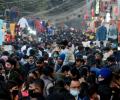
Amid a rise in coronavirus cases and the threat of the Omicron variant, the Delhi Disaster Management Authority (DDMA) on Wednesday directed district magistrates to ensure no Christmas and New Year gathering takes place in the national capital.

A business in India wanting access to maps and geospatial data would typically have to wait months before it got what it wanted. All this is set to change with the new guidelines on geospatial data, report Neha Alawadhi and Peerzada Abrar.
There is no rule book to tell you about the hows and whats of sex because every living being is born with the tendency to master the art when the time comes. Just take a moment, relax and introspect.

Additional infrastructure for dining rooms in each of the school has been recommended.
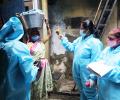
Officials said several witnesses were heard on the impact of the pandemic. They added that this was the longest meeting of the panel without a break so far.
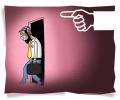
'The impact of economic shocks on the labour markets is usually on the young who delay their entry in response to a fall in job opportunities,' says Mahesh Vyas.

The quitline number -- 1800-11-2356 -- is a dedicated toll-free number to help tobacco users receive free support and guidance to subdue their addiction.

The coronavirus caseload surged to 56,46,010, while the death toll climbed to 90,020 with 1,085 people succumbing to the disease in a span of 24 hours, the data updated at 8 am showed.
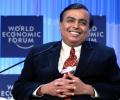
India's 100 top billionaires have seen their fortunes increase by Rs 12,97,822 crore since March last year when the Covid-19 pandemic hit the country and this amount is enough to give 13.8 crore poorest Indians a cheque for Rs 94,045 each.

What is aggravating the situation is that e-commerce firms are facing huge shortage of delivery personnel. They have not been able to bring back their staff to work, despite offering higher pay and Covid-related insurance packages.
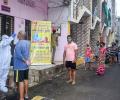
'The virus has been ahead of us till now, and we have been chasing the virus.' 'It is time we have to be a step ahead of the virus, and this is possible only by checking the oxygen level.'

Anik Jain, founder and CEO at Symbo, will answer your questions on insurance -- life, health, motor, travel, etc -- on a weekly basis.

In the past 24 hours, about 1,80,596 samples were tested on July 5 in the country with a total of 1,00,04,101 samples have been tested till date, said an official.
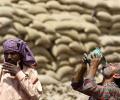
The Survey lists some of the challenges that might impede India's progress.

As worries over India's COVID-19 spike mount -- the country added 75,809 cases on Tuesday to take its tally to 42,80,422 -- scientists are grappling with the pivotal issue of antibodies and trying to understand how they impact on the progression of the disease.
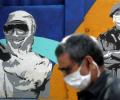
This was the sixth consecutive day when coronavirus cases increased by more than 14,000. Consequently, India has added 92,573 cases since June 20, and over 2.82 lakh this month alone since June 1.
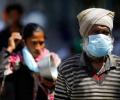
Talking about the Tablighi Jamaat congregation, Agarwal said, "If the Tablighi Jamaat incident had not taken place and we compare the rate of doubling -- that is in how many days the cases have doubled, we will see that currently it is 4.1 days (including Jamaat cases) and if the incident had not taken place and additional cases had not come then the doubling rate would have been 7.4 days."

A recent survey revealed that 46 percent of girls and 30 percent of boys in the US, most of who are in their teens smoke to control their weight.

It took 110 days for the COVID-19 cases in the country to reach one lakh while it had taken 59 days more to go past the 10-lakh post.

Turns out, women have more diverse preferences related to sexual pleasure than believed.
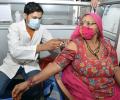
Most of the migrants do not get access to any medical facilities in government-run hospitals or dispensaries as they do not have an Aadhaar card and are not Indian citizens.
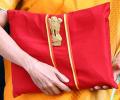
This will be the first time since the presentation of independent India's first budget on November 26, 1947, that the documents containing income and expenditure statement of the Union government along with finance bill, detailing new tax and other measures for the new financial year, will not be physically printed.
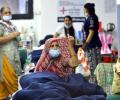
The total recoveries have climbed to 8,17,208, while there are 4,40,135 active cases of coronavirus in the country at present, the govt said as the COVID-19 tally surged to 12.87 lakh.
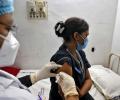
'Nobody is attacking the company or the vaccine.' 'The concerns are about the process and the lack of transparency.'
'Children should include their parents in the group health insurance cover provided by the employer at the earliest.' 'However, the elderly should not depend on it alone and should also buy a personal health cover,' suggests Sanjay Kumar Singh.
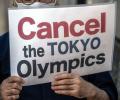
Top Japanese officials said on Tuesday they did not expect a US advisory against travel to Japan amid worries about the coronavirus to affect the Tokyo Olympics - less than two months away - and that US support for the Games is unchanged.

Joint secretary in the ministry Lav Agarwal said 149 new COVID-19 cases, including two deaths, have been reported since Friday. Combined efforts are on to ensure 100 per cent lockdown and that social distancing gets implemented, he said at a press briefing on the current COVID-19 situation in India.
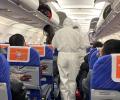
According to a survey by community platform LocalCircles, early-stage start-ups, funding dependent start-ups and many small businesses will soon be fighting for survival as the spurt in coronavirus cases hits them hard.

There are worrying signs that the resolve to continue adhering to the dos and don'ts of the times -- physical distancing, wearing masks and maintaining hygiene protocol - is flagging. This recklessness, more evident ahead of Diwali, may lead to a resurgence in novel coronavirus infections and stall the progress in curbing the disease, the experts said.

The challenge ahead for central and state governments remains enormous.

The health ministry said that 86 per cent of the total active cases were recorded in 10 states of the country.

Chairing the 19th meeting of the Group of Ministers (GoM) on COVID-19 through video-conference on Friday, Vardhan said India has achieved the milestone of more than 10 lakh recoveries, a recovery rate to 64.54 per cent.
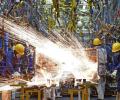
This is the ninth consecutive month that the manufacturing PMI remained above the 50-point-mark.

The SARS-CoV-2 sero-positivity rate among children is high and comparable to the adult population and hence, it is unlikely that any future third wave of the prevailing COVID-19 variant would disproportionately affect children aged two years and above, according to the interim findings of an ongoing study conducted in the country.
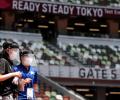
No spectators were present in the stadium, where the Games' opening and closing ceremonies will be held,
